
By Jack Fitzpatrick
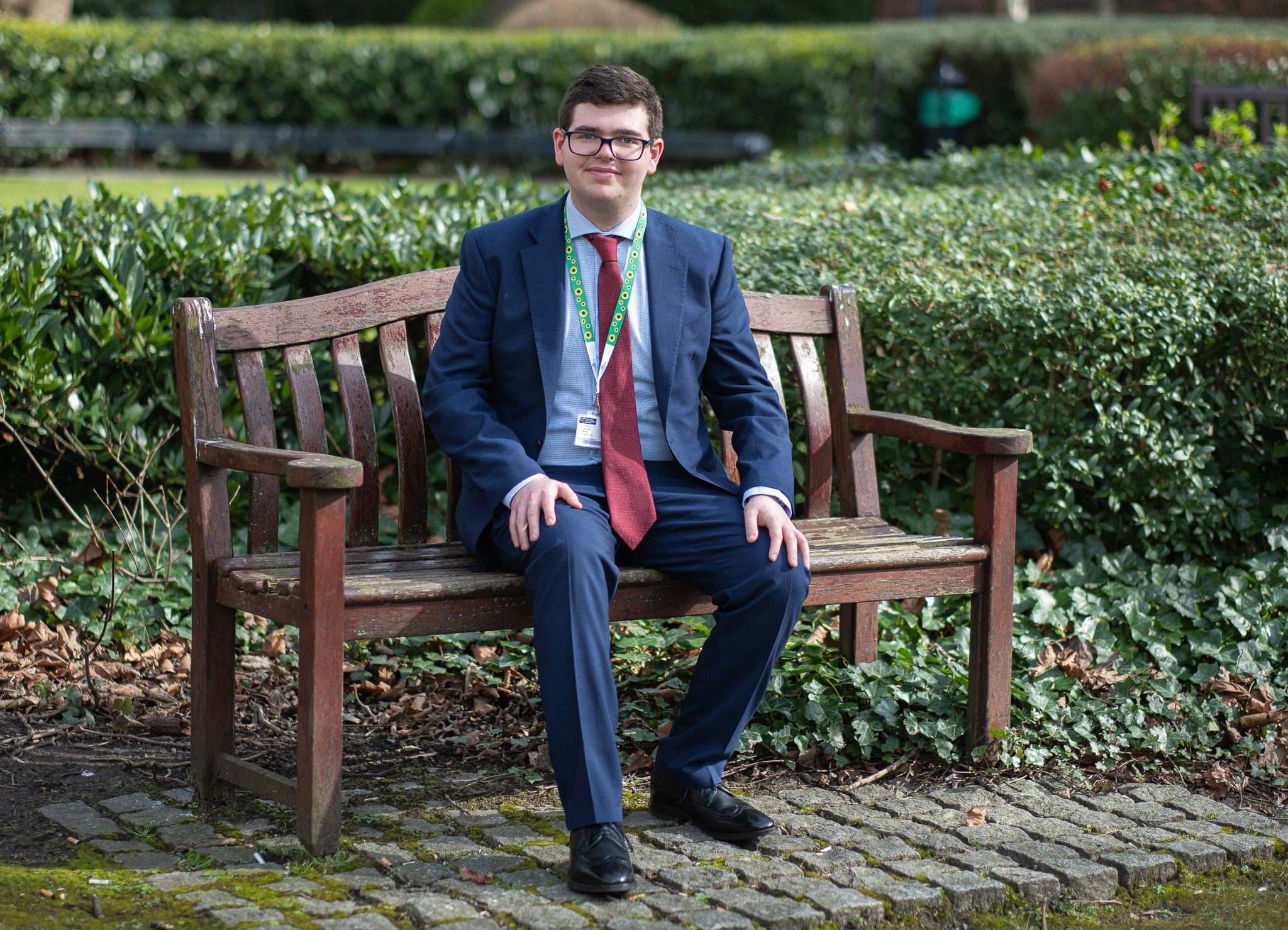
Ahead of our Disability and Employability event on 30 November 2022, the LJMU Student Futures team caught up with 21-year old LJMU Education Studies and Inclusion graduate Jack Fitzpatrick. Jack, who has had a diagnosis of Autism and Dyspraxia since he was three years old, wrote a blog article and spoke at the same event last year, shortly after he’d graduated. He will again provide information at this year’s event about sharing information about a disability (or health condition, or that you are neurodivergent) with an employer, alongside Student Futures Careers and Employability Consultant, Keren Coney. A year on from that event, we spoke to Jack to see what he has been up to in his early career and where he is going next …
I was diagnosed with Autism and Dyspraxia since the age of three and have had many challenges to overcome but through intensive support I have been able to achieve.
My Learning Support Assistant at school has worked on my difficulties with me through intensive physio programmes for my coordination, social use of stories to understand social situations and understanding emotional processing through using pictorial cards (these were the initial emojis before they became popular!!). This has provided me with coping strategies to gradually understand and process the world around me. It has allowed me to excel and achieve way beyond my own expectations. Growing up, a lot of people said that I wouldn’t even be able to take an exam. But I achieved 8 GCSEs, 3 A Levels, and now a first in my Education Studies and Inclusion BA Honours Degree at Liverpool John Moores University.
I’m very fortunate to have had the support of family, friends and learning support assistance. But I’m aware that not everyone has the right support in place. I want to help everyone feel that they are included, because without those that believed in me I would not be where I am now. I want this story to be one of hope and to give people comfort that things will be ok post diagnosis.
The points of transition were difficult for me to process between school and sixth form, the sixth form and University as these were times of uncertainty and we were unsure of what my support package would look like but were supported greatly and it allowed me to settle in with ease. This is because at the point of transition at 16 from my supportive small independent school to a larger sixth form college the Children and Families Act 2014 was enacted and my Statement of Disabilities was transitioned over to an Educational Health Care Plan (EHCP) which was more child centred and was more multi-agency focussed. This was the best thing that could have happened as it allowed for communication between the two educational institutions and helped with the transition allowing me to settle in at the college with ease.
When the time came to transition to University my Local Authority support stopped as I went into Higher Education but through speaking with the college and the disability team at my University I found Disabled Students Allowance which provided me with support for note takers, mental health support and academic mentors to help proof read my work as well as a taxi allowance to help me get to and from the University. This helped massively due to traveling independently on public transport being still one of my major anxieties. I was reading that a staggering 60% of students with disabilities don’t know what Disability Student Allowance is (OFS, 2019). This can therefore cause anxiety, stress and can cause people to drop out as some people with additional needs could not have the support they need to thrive in higher education and would recommend anyone with additional needs to take up DSA when applying.
LJMU has provided a lot of opportunities for myself that I would not have access to usually including sitting on committees within the university and to review and help embed inclusion further into the university culture from a student perspective as well as being involved with their bicentenary in the Humans of LJMU project profiling 50 staff, students and alumni who make a contribution to the university community. All of the lecturers have been fantastic with me, this support has allowed me to excel and I am thrilled that I have a first class BA Honours Education Studies and Inclusion Degree.
Whilst searching for a dissertation for my undergraduate degree partner I came across Aggregate Industries, who have been a fantastic support. I have worked on changing their company culture to become more inclusive. My biggest achievement has been integrating the sunflower lanyard for hidden and unseen disabilities for the organisation which has been rolled out across all of their sites allowing for the facilitation of discussions on disabilities. This work formed the topic of my dissertation which I received a first for.
I am now pursuing a PhD called ‘policing in the 21st century, time for inclusive cultural change’ and I am currently waiting for the outcome on the start of the course hopefully in February 2023. In the gap between now and starting the course I have been busy working with Merseyside Police undertaking neurodiversity training for their departments and doing research on policing culture.
I have also been working voluntary with the ADHD Foundation Neurodiversity Charity on multiple projects including the Neurodiversity Youth Council which is currently being set up to raise awareness of neurodiversity to decision makers within the UK and abroad including a trip the UN in July next year.
I have recently spoken at many different events and forums including a Fireside talk at Wellington College in Berkshire, speaking to the local Violence Reduction Partnership meeting which is a multiagency partnership of local authorities, NHS Trusts and emergency services and Local Policing command teams within Sefton which have asked me in to give lived experience presentations about how Neurodiversity affects individuals.
I don’t see my disability as something negative, I see it as an ability – to help transform lives and be inclusive. I see it as a positive and I think that’s something that it is important for all people with disabilities to do.
Interested in attending the Disability and Employability virtual event?
As part of Disability History Month, the Student Futures team are running a virtual session on Disability and Employability on Wednesday 30 November, from 1.30-3.30pm. The session, which is open to students from any programme or year group, will include inspirational speakers talking about their own experiences of disability and success in the workplace. The speakers are (subject to change):
- Jenny McLaughlin, Project Manager and Lead for the Disability Network at Heathrow
- Abigail Tennant, Assistant psychologist and well-being specialist at Lexxic, a leading neurodiversity consultancy
- Gemma Ellison, Director of Learning and Culture, the MAPD – ‘Making a Positive Difference’ – Group
In addition, students from LJMU’s Legal Advice Centre will provide some information about rights in the workplace. LJMU graduate Jack Fitzpatrick will talk about sharing information about disability (or health condition or that you are neurodivergent) with an employer, alongside Student Futures Careers and Employability Consultant, Keren Coney.
 LJMU Student Futures: Careers, Employability & Start-Up Team