
Student Futures are delighted to feature a blog post by Izzy Hoyle, JMSU Student Staff member and Vice President of the LJMU Literature Society. Izzy recently attended a ‘Publishing Careers Insights’ Day organised by Comma Press in June 2024. In this post, she shares the knowledge and valuable insights she gained from the event…
Publishing Insights Day, Comma Press, 6 June 2024

This year, students from LJMU were invited to attend a Publishing Insights Day. Hosted at Manchester Metropolitan University (MMU) in collaboration with Comma Press, industry professionals discussed the nuances of working in such an industry, their experiences in different sectors, and the evolution of the publishing industry in the North.
The information shared is vital for those aspiring to break into the industry and for those wishing to gain insider knowledge on what the publishing industry is all about. This blog post will shed some light on the day’s key takeaways for those who missed the opportunity to attend.
Keynote Speaker – Sam Missingham
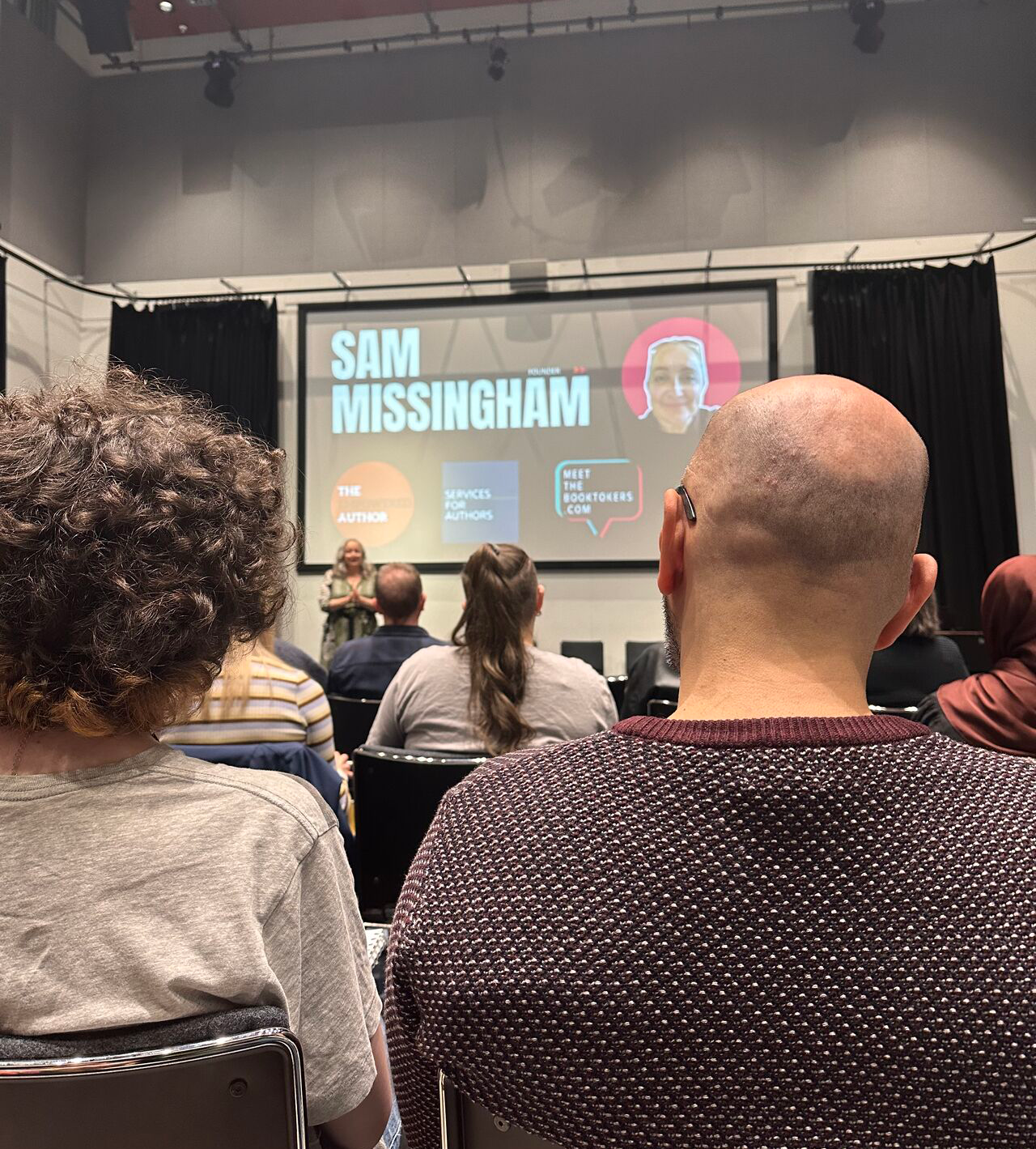
Sam Missingham, the Keynote speaker for the event, kicked off the day with an hour of advice on everything from interview prep 101 to freelancing. Sam discussed her two projects The Empowered Author and Meet the Book Tokers; two platforms which focus on supporting freelancers in the industry. This was followed by discussions surrounding self-publishing and the importance of having marketing strategies and social media proficiency in today’s publishing landscape.
Sam then segued into discussing her experience in the events side of the industry, reminiscing her experiences when hosting ‘The Industry Awards’ and her experiences hosting events at book festivals.
Her keynote was a fantastic introduction to the various interlinking sectors within the publishing industry, the power of freelancing, and the importance of looking after authors. Sam also touched on various important topics for aspiring young professionals and freelancers, the most notable being:
Where should I look for opportunities?
- Job advertisements (Company websites, LinkedIn etc)
- Agency websites
- Local bookshops and independent presses
- Social Media pages
- Publisher Websites
- Apprenticeship Sites
- Graduate Schemes Sites
- Volunteering Organisations
What skills should I focus on in preparation for working in Publishing?
- Social media marketing – Canva, Tik Tok, Instagram etc.
- Video editing – Cap cut, Adobe Express, iMovie, etc.
- Self-publishing – Kindle direct publishing for practice, creating a website and publishing blog posts on websites like Substack, having a newsletter, and building a social media presence.
- Crowdfunding / fundraising – from fundraising for societies to running a 5k for a charity, this is a valuable skill – especially for those who wish to finance the creation of their own press.
- Volunteering – Volunteering is a fantastic addition to any CV; especially if you have curated your volunteering experience to suit your future career. JMSU volunteering works with Writing on the Wall – a creative writing events organisation based in Liverpool – amongst a plethora of organisations for those who are unsure where to start with volunteering.
- Audio formats – podcasts, radio, audiobooks. Gain familiarity with these forms, and maybe experiment with recording your own!
- Event organising – joining society committees, organising a birthday party, organising events to promote that side hustle whilst you’re at university – just go for it! Knowing how Eventbrite functions is a good place to start when setting up an event.
- PA work – admin, customer facing/ reception work, errands, and organisation etc.
- Writing skills – Writing, annotating and proof-reading work for yourself and peers is important in an industry where writing skills are infused into practically every sector. Streamlining your academic writing skills is key when considering publishing careers. The Academic Achievement team are a fantastic support network for students needing any tips.
Getting hired: Sam’s top tips
- Tailor your CV to each job – do not just copy and paste CVs for every vacancy or use generic answers. You need to edit each one accordingly to bring out your skills which work specifically in that job’s context/brief. Make sure you do your research into the company; each publisher has their own niche or genres – know them! You can get help with your CV and Cover Letter with Students Futures by booking an appointment here.
- Consider a visually attractive CV – jazz it up, make it stand out visually with a bit of art, interesting layout, graphics etc (but within reason, it should still be formal and the CONTENT is the most important!). But remember while creative CVs allow you to display your personality and creative flair, they’re not appropriate for every role or industry. Check out this article for great advice on creative CVs.
- Keep in communication with an employer – even if youdon’t get the role you applied for or missed out on an interview, staying in the loop shows genuine interest and employers will take note of that for future vacancies because it demonstrates consistency and passion!
- Always ask for feedback – This goes hand in hand with the above tip, showing a genuine desire to improve your interview skills not only demonstrates determination, but humility too.
According to Sam, all these attributes are gold dust for recruitment teams and in the workplace. They will undoubtedly help in the future and will hopefully help to make the process less daunting. With this advice in mind, make sure to remember that it takes multiple attempts and consistency to get to where you want to be. Trust in the process, focus on the above tips, show yourself some kindness, and you will get to where you need to be!
Publishing Beyond London: Ra Page in conversation with Jonathan de Peyer, Hazel Homes & Habiba Desai
After the keynote, Comma Press founderRa Page tabled questions surrounding the North to ascertain the varied experiences of publishing’s developments in devolution from London. He mentioned that a mere 12% of the workforce comes from the North of the UK, and that this small percentage largely works in London. It is this reason that spotlighting Northern professionals and the work they are doing is essential when creating a more diverse and accessible publishing industry.
Hazel Hayes from UCLAN Publishing discussed her experiences working for a northern university press, the importance of micro-presses, and how the increase in working from home flexibility post-pandemic has facilitated this shift away from London. This shift, she feels, is helping to provide greater inclusivity for those living in the north who wish to break into the industry.
Fox & Windmill’s creator Habiba Desai focused on the importance of entrepreneurialism in the industry, especially when it comes to changing the representation present within the industry for Southeast Asian-British professionals. For Desai and her company, mentorship was a key factor in stabilising her vision and maintaining an upward trajectory for her business with invaluable advice from industry professionals. Top tip: always have an open ear and get active on LinkedIn!
Finally, Jonathan de Peyer related his experience working at Harper North, the Northern branch of Harper Collins. His discussions emphasised the importance of setting an example for big publishers to open offices in the north to allow for greater visibility and accessibility for authors and agents alike. Opening these spaces in cities like Manchester offer more than just expansion for the big players in the industry – they are lighthouses for northern creatives.
Ra Page – Structure of the Industry
Ra Page went on to use his expertise as Comma Press CEO to deconstruct the journey a book takes from conception to the reader’s hands. I have crudely recreated his diagram for readers who wish to see it in figure [1.1].
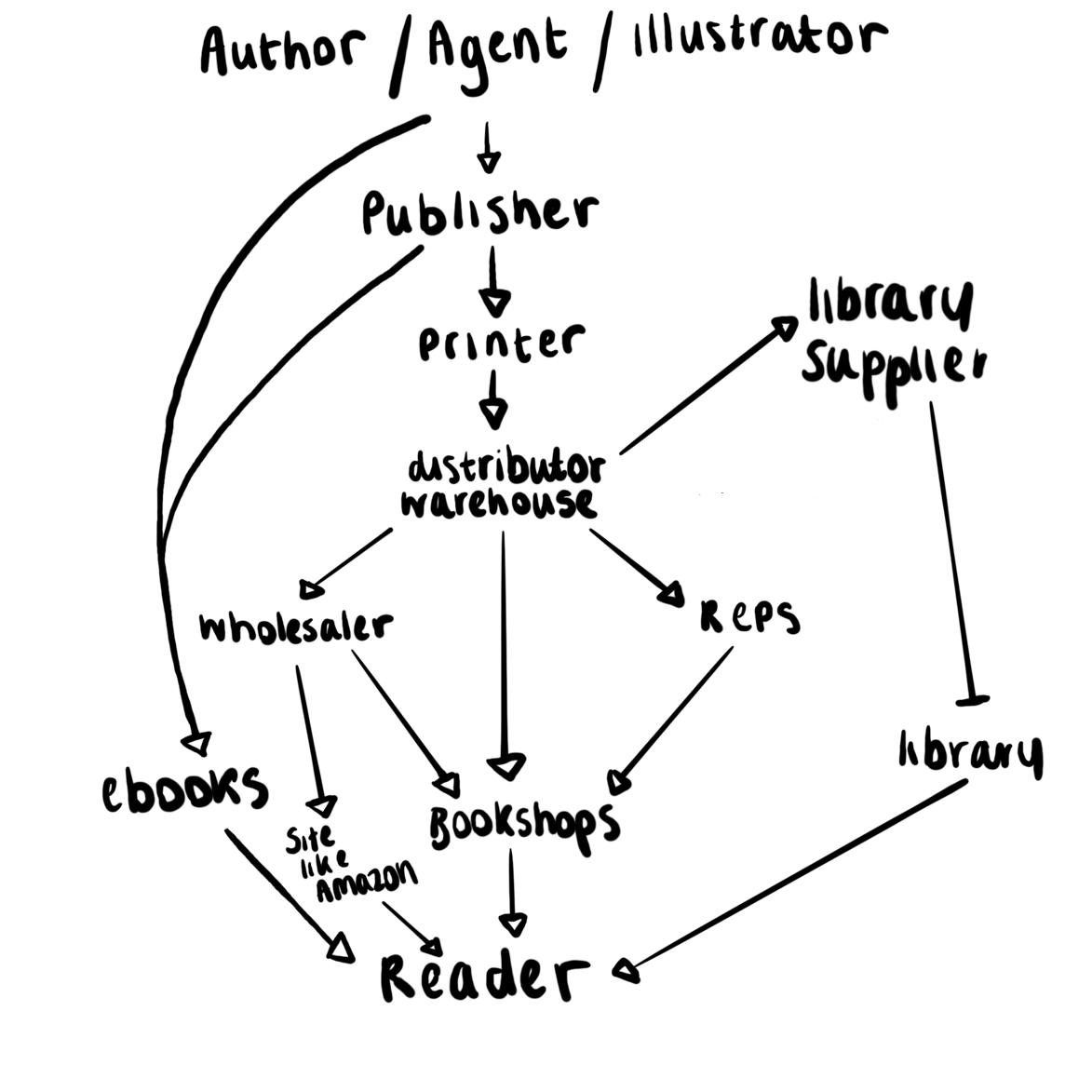
Page detailed what being a rep entails and how a book is introduced to the industry prior to official release. AI, or Advance Information, are sheets which are given out to reps, bookshops, influencers etc by publishers which sum up the work, the author, the book’s USP [Unique Selling Point] and statistics including the book’s release date. Getting these AIs into the right hands is key to building hype and thus guaranteeing future success for a book come release day.
James Keane – Intro to Editorial
James Keane from Northodox Press discussed some key aspects of the editorial sector of the industry. His talk focused on key jargon and documents which are gospel for editorial teams. They are as follows:
- House Style Guide – Each publisher has their own style guide (HSG) which is a manual for editorial staff. It is a manual of style and format used by the publisher which facilitates consistency across releases. It contains fonts, design features, colours, typesetting etc.
- Frontlist – This is the publisher’s list of book releases for the next couple of years. It is a very important document which serves as a timeline of deadlines for the whole house.
- Backlist – This is the publisher’s list of all previous book releases.
- Critical Path – The critical path of a publishing house is a more detailed timeline parallel to the frontlist which shows which tasks need to be completed for the progress of a release to run smoothly.
These documents and lists are the lifeblood of an efficient publishing house, no matter which department they work in. Reading samples of these documents are a good form of preparation for interviews and work experience in the industry, and applying the philosophy of the critical path to deadlines at university is a fantastic way for students to become acquainted with this process.
James Benson – Sales

Regional sales freelancer James Benson discussed the importance of building relationships with distributors and bookshops. Having experienced selling to anywhere from your traditional book shop to gift shops selling specialising in the outdoors, Benson explained how freelance sales (and sales in general) is all about knowing a store’s niche and building relationships with a variety of clients to sell those books.
Benson also championed the importance of bookshops and bookselling as a fantastic career choice. He argues that bookselling is a perfect springboard for working in other areas of the industry, giving a special shoutout to Southport bookseller Broadhurst’s as one of his favourite longstanding clients.
David Pearson – Book Design
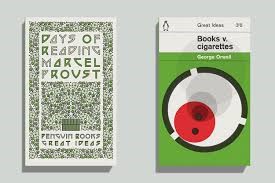
Design sector heavyweight David Pearson showed the audience his astounding body of work, deep diving into the changing covers of penguin novels throughout time and the creations in his penguin colour series. His approach focused on the importance of having multiple iterations of a piece, and stressed how important typeface, negative space, colour, texture and placement are when it comes to creating arresting pieces which will fly from shelves.
Pearson explained that good book design is paramount to a book’s commercial success. The right design helps to capture attention at a glance, and in doing so, slows down our fast-paced society by creating moments of reflection and curiosity. This is because the right cover helps to build a relationship between the book and the customer, starting before a single line is read.
Isabelle Kenyon – Starting a Press
The penultimate talk was by Isabelle Kenyon, founder of Fly on the Wall Press who won Press of the year 2024. Kenyon discussed the ins and out of what makes a successful small press since its accidental inception in 2018.
In her talk, Kenyon explained that being the creator of a press means that you need to have eggs in multiple baskets. For example, having editorial control as well as overseeing sales means that you can execute your brand vision from start to finish, infuse it into the books which you publish throughout their creation, and (hopefully) make better sales because of it.
It is because of this, according to Kenyon, that having a niche is so important. In the case of Fly on the Wall, their niche focuses on political fiction, poetry, and anthologies which cover subjects from the environment to feminism. Along with creating a niche, tracking consumer analytics is important when it comes to building a loyal community, as well as building strong relationships with authors.
It is with these fundamental goals in mind that a foundation for a successful small press can be built and should be key takeaways for any students reading who have entrepreneurial endeavours in mind.
Jason Bartholemew – Rights and Agenting

Our final speaker, Jason Bartholemew, discussed the rights sector of the industry, and the importance of outreach in varying countries. Publishers who wish to procure a book, print it, and sell it need to purchase the licensing rights to that book, so they can own the independent property, and do as they wish with the source material to make a profit.
There are also various sub-rights which a can be bought from those who own the licensing rights to a book, including:
- Translation for various countries
- US market
- Film
- TV
- Audio
- Serial
These various sub-rights show the breadth of the rights sector and the importance it plays in a book’s wider strategy and marketability. No book belongs in just one market or in one area, and there is a whole world of possibility for a book which skilled professionals can tap into. And so, when it comes to maximising the potential of a book’s global presence, the rights department becomes an important part of every publishing house and independent press.
Final Thoughts
Comma Press Publishing Insights day covered a variety of essential topics from industry leaders, and those speaking inspired admiration and hope in the future of the industry for all who had the pleasure of listening. Hopefully this blog post has captured the breadth and depth of the publishing world and demystifies the industry for those who need guidance to support their future careers.
Good luck to all the aspiring professionals wanting to prepare for a life in publishing (and those who aren’t) – we hope you are having a wonderfully restful summer break!

Penned for LJMU Student Futures by Izzy Hoyle, JMSU Student Staff & VP of LJMU Literature Society
Thank you Izzy for a great blog piece for Student Futures. If any LJMU students or graduates reading this would like to discuss any of the topics mentioned or explore their career options, you can book a 30-minute meeting with one of our Careers and Employability Advisers.
The Student Futures team also hosts regular employer-led events and webinars throughout the academic year where you can hear from employers from a range of sectors and job roles. Keep an eye on our events booking website for listings.
 LJMU Student Futures: Careers, Employability & Start-Up Team