
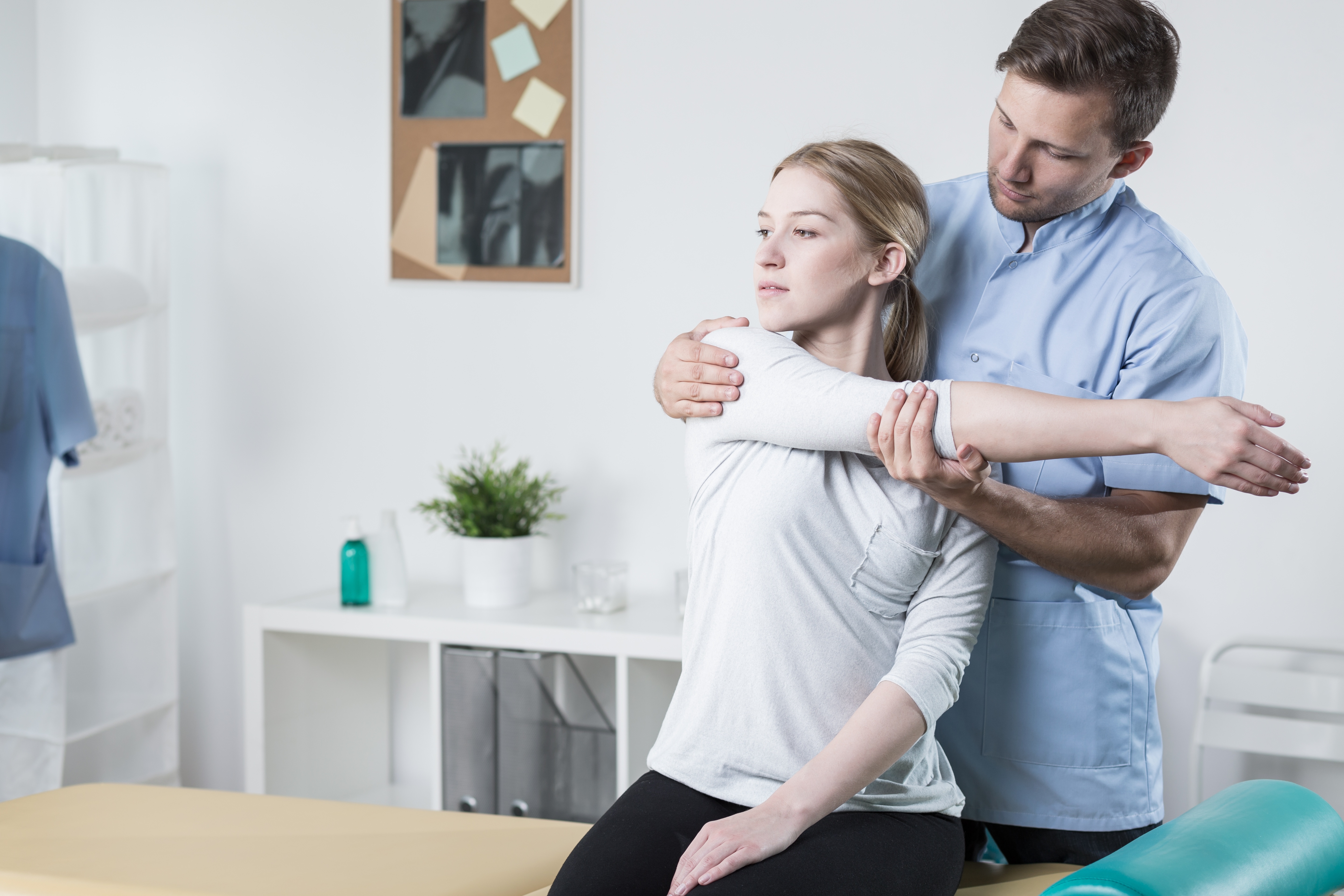
Recent reports have shown that the health sector is one of the job areas which still has a steady number of vacancies. According to the latest data, health and social care vacancies are at 91% of 2019 levels. Therefore, it is worth noting that science graduates may be able to pursue an accelerated route into some health careers. The options may be broader than you think within the allied health professions. Careers adviser Laura Aldridge gives an overview of which opportunities may be open to you.
What are the allied health professions?
The ‘allied health professions’ is a term used for those careers which involve working directly with patients, but not as a doctor or nurse. The allied health professions include roles such as chiropodist, dietitian, occupational therapist, physiotherapist, radiographer and speech and language therapist.
What are the options for science graduates within the allied health professions?
Some (though not all) allied health professions offer an accelerated route for graduates, which means that instead of completing another three or four-year undergraduate course, you may be able to qualify in some of these fields by completing a two-year Masters (or postgraduate diploma) course. Examples of allied health professions with an accelerated route for graduates include: dietetics, occupational therapy, physiotherapy, radiography and speech therapy. You can find a list of which universities offer recognised vocational courses, in the allied health professions, on the Health and Care Professions Council (HCPC) website. If you are looking for Masters courses which train you in a specific field, look for courses which are listed as ‘pre-registration courses’ as these qualify you to work in the related job area. You can still consider the three-year BSc courses in the aforementioned fields as well. However, many graduates do choose the two-year courses if these are available, as they provide a faster route to training and qualification.
Which academic qualifications do I need to apply to courses within the allied health professions?
If you are interested in applying to Masters courses in one of these fields, make sure that you check the academic entry requirements for each individual course carefully, as they may have both A-level requirements and specific degree requirements. You can find out specific requirements by checking with the admissions tutors for each course.
Are there any other issues to be aware of when seeking healthcare experience?
You will need to check directly with the volunteer co-ordinator for each hospital if there has been any change to them accepting volunteers, due to the current pandemic. Unfortunately, some hospitals have temporarily suspended their recruitment of volunteers although it may still be worth you registering your interest in volunteering for a particular hospital, so that you will be notified when they do start accepting volunteers again. You could consider other types of volunteering for example within a care home or hospice, but again you would need to check if these types of organisations are still accepting volunteers. Our mini guide about volunteering also provides further advice about looking or voluntary work. If you already have some experience, you may also be able to find some paid work as a healthcare assistant within a hospital, or as a care assistant or support worker, within a care setting. If you receive an offer of paid or voluntary experience for one of the aforementioned job roles, please make sure to keep yourself safe. This is particularly important if you are working in a role that involves front line contact with patients. Before you take up a job offer, it is therefore advisable to check with the employer about the health and safety procedures that they have in place to protect yourself and their patients.
How do I apply to these types of courses?
If you are applying to the two-year Masters (or postgraduate diploma) courses, then normally you would apply directly to the university which runs the course. There are some exceptions to this, however, so make sure that you research the application process of each individual university. Some of these courses can also have a January start date and this may affect the timescale of when you need to apply, so make sure you also check application deadlines carefully with each university. Our mini guide about ‘a career in physiotherapy’ will give you more details about the application and interview process for applying to Masters courses in physiotherapy.
How competitive is the application process?
There are high levels of competition for places on some of these courses, such as the dietetics and physiotherapy courses. This is why it is important to ensure that you can make the strongest application possible by gaining relevant work experience before applying. You can also have your application checked by our employability advisers. Also, please make sure that you have a back-up plan in case you are not successful in gaining a place on one of these courses.
Have LJMU graduates gone into some of these roles?
Yes, a number of LJMU science graduates have gone onto Masters level courses, which have enabled them to train in one of the allied health professions. In the career planning guides for the School of Pharmacy and Biomolecular Sciences and the School of Sport and Exercise Sciences, you can find a number of inspirational case studies of graduates who have gone into these roles.
Are there any other routes into the allied health professions?
If you wish to qualify within one of the allied health professions, you would normally need to complete a HCPC recognised course. However, there are ‘assistant’ roles within the NHS you can apply to directly after your degree course, without completing another course. On the NHS jobs website, these roles are usually advertised as ‘assistant physiotherapist’, ‘therapy assistant’ or ‘assistant dietitian’. Some graduates may work in these roles before deciding to go on to complete a further course to qualify fully in the relevant professional field.
Further help
If you would like to discuss your career ideas further, you can make an appointment to see Laura. The Careers, Employability and Enterprise Team are currently supporting students through virtual appointments, which includes telephone and video conference appointments. If you wish to book an appointment with Laura or another member of the team, please telephone 0151 231 2048 or email careers@ljmu.ac.uk.
All facts were correct at the time of going to print. Some information can be subject to change, however, so please double check any facts (for example regarding academic entry requirements) before applying to courses. If you enjoyed this article, here are some of Laura’s other blog articles which may be of interest to you: laboratory based roles in coronavirus testing and vaccine development and applying to graduate medicine.
References
BBC News (2020): Coronavirus: How do I find a new job and which sectors are hiring? From the BBC News website: https://www.bbc.co.uk/news/explainers-53685650
Health Careers (2020): Roles in the allied health professions. From the Health Careers website: https://www.healthcareers.nhs.uk/explore-roles/allied-health-professionals/roles-allied-health-professions
Useful websites for further research
Health Careers: www.healthcareers.nhs.uk/
Health and Care Professions Council: A website which allows you to search for NHS recognised courses which can train you in one of the allied health professions www.hpc-uk.org/education/
The Association of UK Dietitians: www.bda.uk.com
Chartered Society of Physiotherapists: www.csp.org.uk/professional-union/careers-development/career-physiotherapy
NHS Bursaries Information: www.nhsbsa.nhs.uk/Students
NHS Jobs: www.jobs.nhs.uk

